


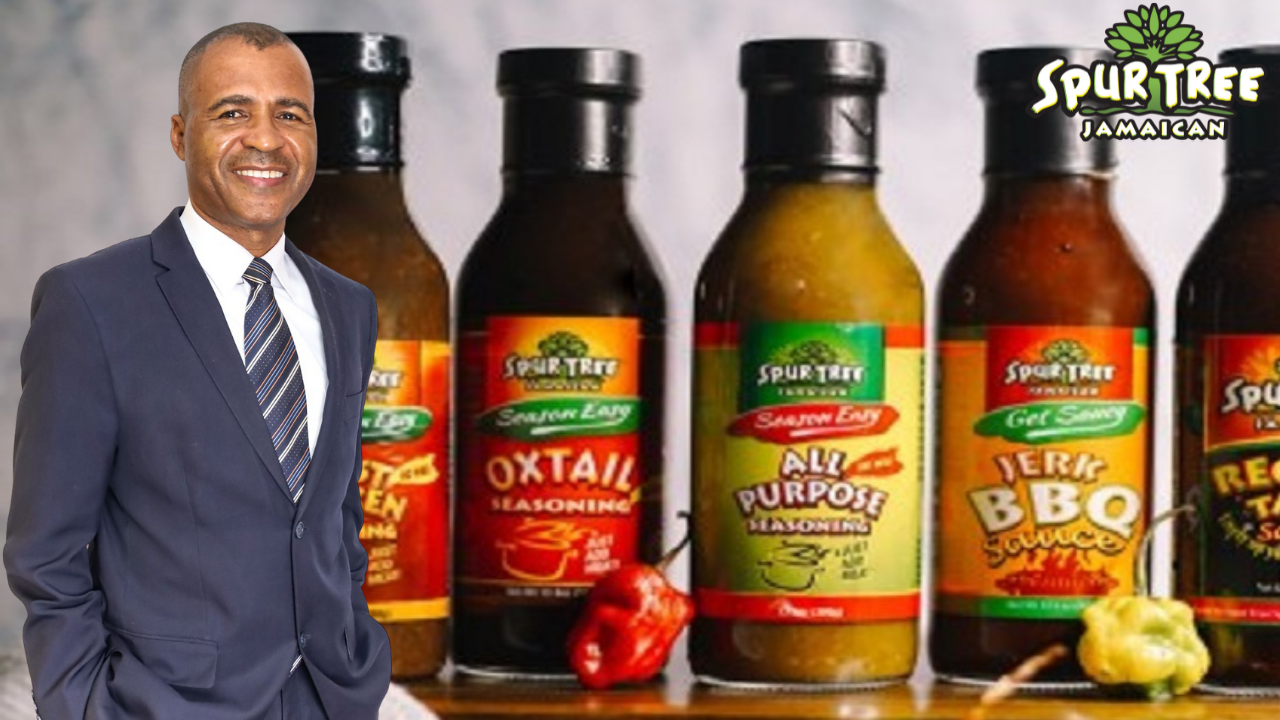
Spur Tree Spices delivers big growth despite harsh weather setbacks
Spur Tree Spices has managed to deliver one of its strongest performances yet, even as Jamaica faces a punishing run of adverse weather.
Speaking on Taking Stock with Kalilah Reynolds, CEO Albert Bailey says, between years of drought, excessive rainfall, Hurricane Beryl and now Hurricane Melissa, the company has had little room to breathe. But instead of faltering, Spur Tree has posted impressive growth, proof of a business model built on resilience and long-term strategy.
“We are a much more resilient company right now than we were a couple of years ago,” Bailey said.
He noted that Spur Tree has invested heavily in expanding efficiency, building storage capacity and diversifying its product lines. That preparation is now paying off.
For the third quarter of 2025, Spur Tree reported revenue of $638 million, up 52% from the previous year. Profit surged even more sharply, climbing 160% to $81 million.
Bailey said those numbers reflect both improved performance across subsidiaries and recovery in segments previously affected by tariff uncertainty in the United States. Even the company’s newer dry products and online sales channels, such as its Amazon marketplace, have begun contributing meaningfully to growth.
While Melissa caused damage to Spur Tree’s farming operations, Bailey said the company’s proactive approach helped soften the blow.
He explained that over the past few years, Spur Tree has shifted more of its raw material supply to in-house farming, built stronger storage infrastructure and accumulated several months’ worth of inventory to guard against supply disruptions. He said the company aims for six months of raw material availability and currently has about four months on hand, enough to prevent any immediate impact on production.
New products, including the fast-growing dry seasoning line and the increasingly popular fried chicken mix, have also helped drive sales. At the same time, export markets remain the backbone of the operation, accounting for 85 to 90 per cent of total business.
Some shareholders have expressed concern about the lack of dividends, but Bailey insists this is temporary. The company has been reinvesting heavily to withstand climate shocks and position itself for sustained profitability.
“Dividend will return,” he said. “We just wanted to make sure the foundation of the business is very strong and very resilient.”









Leave A Comment