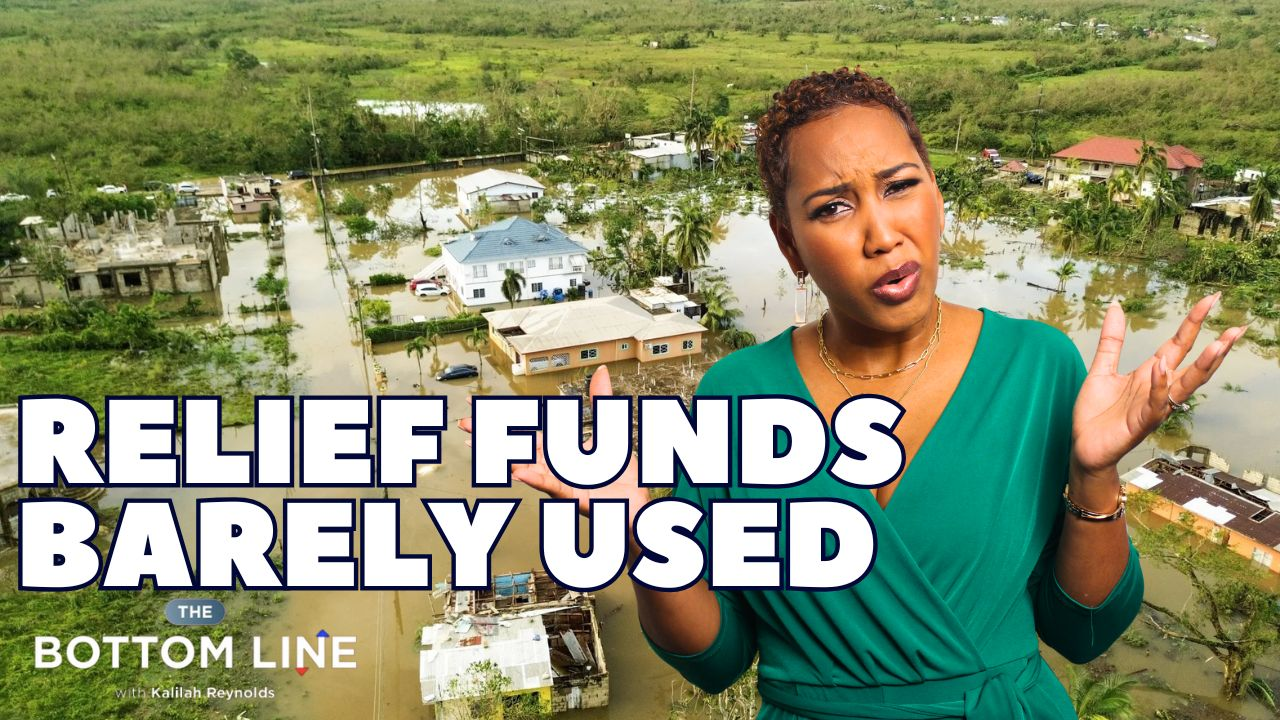
Hurricane Melissa caused up to US$7 billion in damage. That's nearly a third of Jamaica’s economy. So far, we've unlocked about US$250 million in funding for the recovery effort.
We've got a long way to go and we will need a lot of support. Are you hopeful for the recovery effort?
Categories: Climate, Disasters & Recovery - Jamaica - The Bottom Line
Audio Only Stream
Hurricane Melissa is estimated to have caused between six and seven BILLION US dollars in damage! But Jamaica will only unlock about a quarter billion US dollars in this first round of disaster funding, including the catastrophe bond. So how will we recover?
Early estimates put the damages from Hurricane Melissa at six to seven BILLION USD. That’s about a trillion Jamaican dollars, which is the amount the government usually spends for the entire country in a normal year.
It’s also about 28 to 32 percent of GDP, about one third of the country’s national output. This means that one out of every three dollars that this country earns has been wiped out!
And with two major industries down – tourism and agriculture – and at least half the country still without power, our productive capacity and earnings are also going down.
Now for reference, Hurricane Beryl caused about J$32 billion in damages when it hit in 2024. That’s about US$200 million. That makes Melissa at least 30 times worse than Beryl!
Beryl affected the economy for about two quarters. Recovery from Melissa may take several years.
According to Prime Minister Andrew Holness, Melissa’s damage to the economy was also worse than the infamous Hurricane Gilbert, which tore through Jamaica in 1988.
Now in the short to medium term, there are several sources of aid and disaster funding. The first is the catastrophe bond that I’m sure you’ve heard about by now.
The Cat bond is basically an insurance policy. Jamaica paid premiums every year and now that the worst has happened we’ll get the payout of US$150 million or J$24 billion. And I’ve seen questions about this, no we won’t have to repay this money. It’s insurance. Once we keep paying the premiums, we’ll have access, unless the bondholders decide it’s too risky and don’t want to renew.
Jamaica is also set to receive about US$71 million from the Caribbean Catastrophe Risk Insurance Facility (CCRIF). That’s the largest payout in its history.
Then there’s the Contingency Fund that the government sets aside for natural disasters. We can access J$5.3 billion from that or US$33 million. The Government will also get another J$1 billion from the Natural Disaster Reserve Fund.
All these combined total about US$260 million, or about J$42 billion.
Several nations have also pledged assistance, including US$1.2 million in aid and supplies from Cayman and US$11 million in initial support from the United States.
The EU has also released 5 million euros to assist Jamaica, Cuba and Haiti. I’m not sure how much each country will get but that’s money as well.
And in the coming days and weeks other countries may pledge more financial support. But like I said, it’s not a quick fix. It will take years for us to recover.
The Prime Minister has said the recovery will take place in four phases, and we expect different levels of funding, including loans, will come into effect. So yes, we will have to borrow some of the money to fix some of the damage.
This will increase our debt levels temporarily, especially since our GDP is going to fall. But with proper management, I’m hoping the economy bounces back fairly quickly. I mean we recovered from a global pandemic right? And the world hadn’t seen one of those in 100 years. If we work together, we can recover from this too.
And that’s the bottom line.
If you would like to assist, you can donate or volunteer through the Jamaican government’s official platform: supportjamaica.gov.jm
If you prefer a non-governmental organization, you can give through foodforthepoorja.org
More THE BOTTOM LINE Videos