Is “Eat What You Grow” Possible for Jamaica?
May 7, 2026
More THE BOTTOM LINE Videos

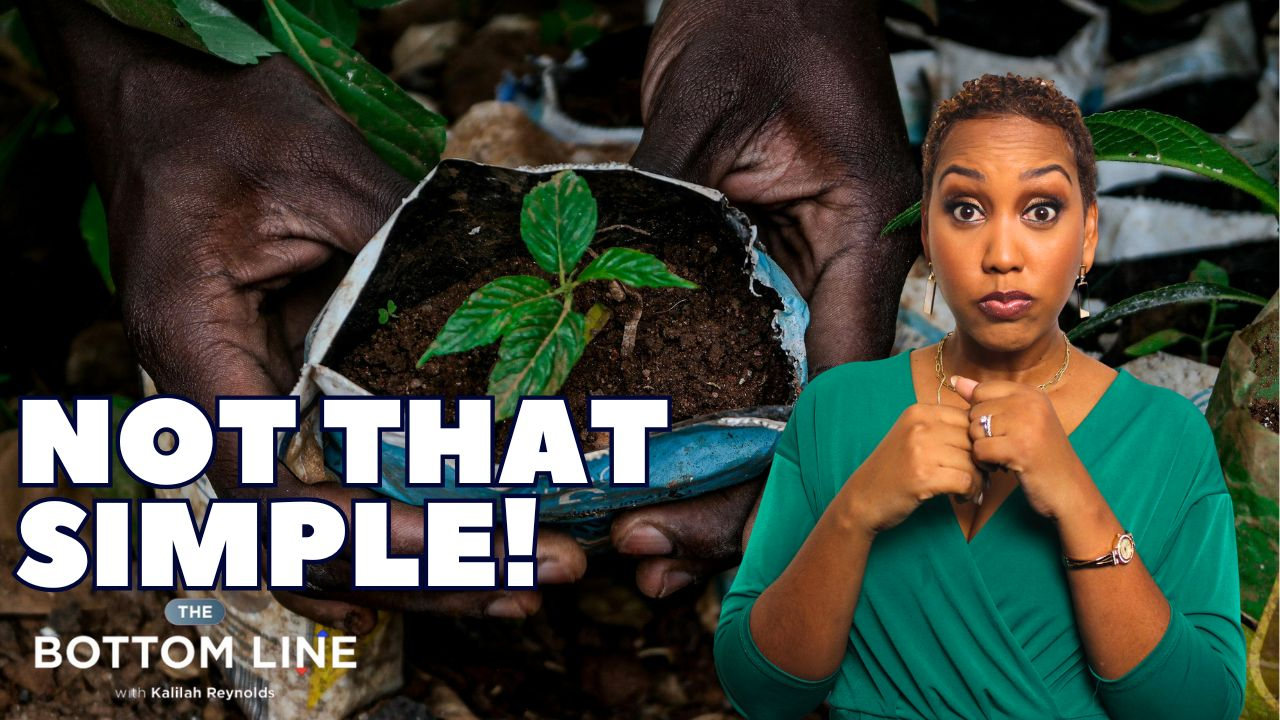
In the event of a food shortage in Jamaica, could "eat what you grow" be a solution? Well... it might not be that simple. It's not just the cost of imports that could pose a problem. The farming and manufacturing side is being heavily affected too!
Read the complete text of this episode for easy reference and search.
If Jamaica is really heading for a food shortage, why can’t we just grow our own food? Well it might not be as simple as that.
There’s been a lot of talk recently about possible food shortages, especially with everything happening globally.
Jamaica imported about 2-point-1 billion Jamaican dollars worth of food and consumer goods in 2025. That’s over 13 million US dollars, and roughly 25 percent of our overall imports.
That’s a lot. And with everything that’s going on around the world–war in Iran, major shipping routes closed, high fuel prices–those imports might not be so sure.
Your next thought is… well, just grow what we eat, eat what we grow. But it’s not that simple.
Because right now, one of the biggest risks to food production is the availability and cost of fertilizer. A large share of the world’s supply depends on oil and gas. And you already know where I’m going with this. The conflict between the US and Iran has held up the Strait of Hormuz and about 20 percent of the world’s oil supply.
So not only has that impacted regular fuel prices, it’s also disrupted about a third of the global fertilizer supply. That has pushed up fertiliser prices and reduced availability, which means farmers either pay more or use less.
Then add in the weather. Hurricane season is knocking on our doors again.
In 2024, Hurricane Beryl wiped out crops in key farming areas like St Elizabeth. Some of these crops have cycles that are months long. So just when farmers would have been prepping to reap, here comes Hurricane Melissa in 2025, which did even more damage.
We’re now a few weeks away from June, when the cycle will begin again. And even when farmers replant, supply doesn’t bounce back quickly.
There’s also the demand side. Our tourism sector took a big hit. Even though it’s recovering, it’s still slow. When tourism slows, farmers lose steady buyers like hotels, which affects how much they plant and earn.
Put it all together and you get the risk. Higher costs, lower yields, weather damage and weaker demand all hitting at once.
So yes, we can grow food here. But producing enough, consistently and affordably, is the real challenge.
And that’s why you should brace yourself for inflation. And affects EVERYTHING – stock prices, bond prices, interest rates, how easy it is to get a loan or a mortgage, and so much more.
So pay attention! Can’t say me neva warn yuh!
And that’s the bottom line.
May 7, 2026
More THE BOTTOM LINE Videos