


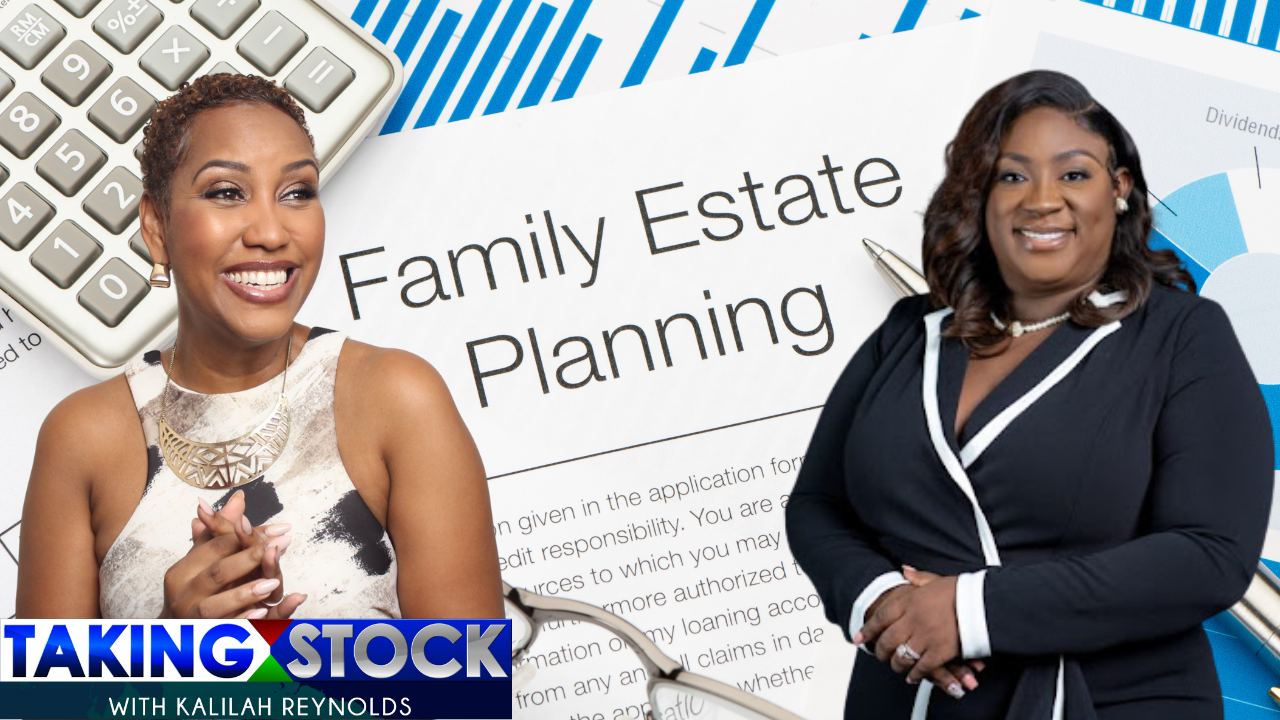
Estate Planning in Jamaica
Attorney-at-Law Michelle Thomas says one of the most common mistakes Jamaicans make in estate planning is including a jointly held asset in their wills.
Speaking on Taking Stock with Kalilah Reynolds, Thomas explained, “if you hold a property as joint tenants, once one person dies, the property goes straight to the other owner. You cannot will it to someone else.”
She said that the rule also applies to joint bank accounts. If your name is on an account with someone else, the surviving person automatically becomes the owner, even if they didn’t contribute a cent.
Estate planning is about making a clear plan for what should happen to your money and property when you die or can no longer make decisions. In Jamaica, this can be done using a will or a trust. Each option has different costs and rules.
Thomas explained that a will is the cheaper option at first, but it can become costly later. Your family may need to go through a process called probate, which can be time-consuming and costly.
They’ll also have to pay taxes like transfer tax, which is 1.5% of the value of any property above $10 million. Add in legal fees, and families can end up paying millions of dollars before they can claim what you left for them.
A trust, on the other hand, can save a lot of trouble. It’s a legal tool that helps you manage and pass on your assets while you’re alive or after death. With a trust, there’s no need to go through the courts or pay some of the taxes required with a will.
“Trusts aren’t just for rich people,” Thomas said. “If you have land, money in the bank, stocks, anything, you can set up a trust with the help of a lawyer.” She noted that trusts can also be better if you have children or assets in different countries, because you can create separate trusts in each place.
Another important detail? If you get married after making a will, that will is no longer valid. “Marriage cancels the will,” Thomas explains. “You have to make a new one after the wedding.” That’s a fact many people don’t know until it’s too late.
And what about power of attorney? It’s only useful while you’re alive. As Thomas puts it: “When you die, the power of attorney dies too.”
Thomas emphasised that the time to start thinking about estate planning is as soon as you own something, a house, some land, or even a savings account.



Leave A Comment