


New JPS CEO issues caution for plans to increase renewable energy target
The new President and CEO of the Jamaica Public Service (JPS), Michel Gantois has thrown a word of caution to the Government regarding its revised plan to have Jamaica using 50% of renewable energy by 2030.
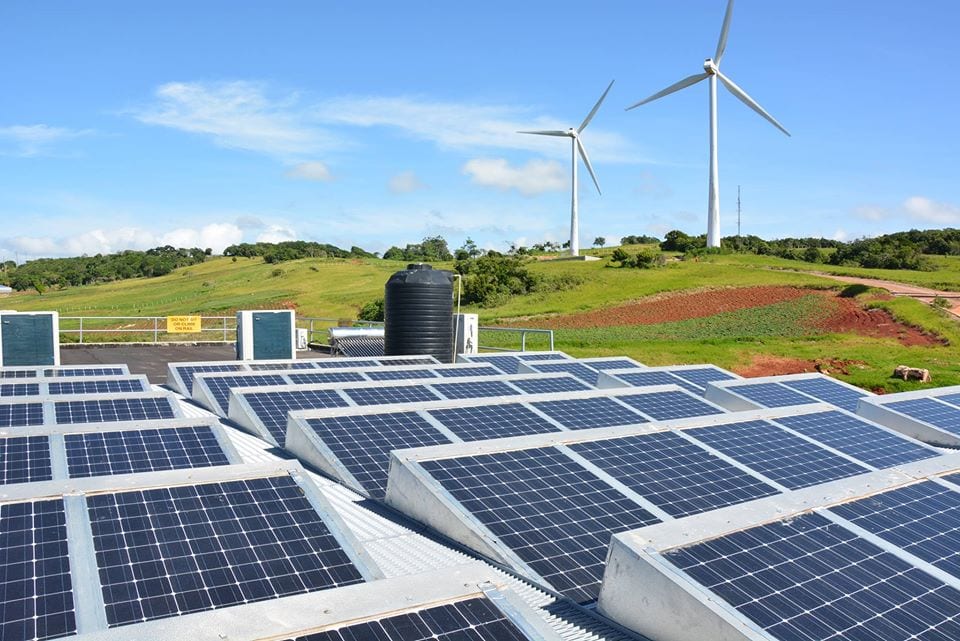
Prime Minister Andrew Holness had announced the ambitious target while unveiling a new state-of-the-art solar PV array at his Office back in 2018. At the time, a target of 30% was set as policy by the Cabinet.

Speaking on Taking Stock with Kalilah Reynolds recently, Gantois said Jamaica has been lagging behind in this area but argued that careful considerations must be given with the introduction of more renewables.

Michel Gantois,
President & CEO, Jamaica Public Service (JPS)
Gantois said it’s good to have an ambitious target as global efforts continue to reduce carbon dioxide (CO2) emissions and increase energy efficiency; however, at the same time, he reasoned that too much too fast could prove detrimental to the energy sector in the long run.
He said in practice, the administration will have to ensure that the cost of electricity and it’s reliability are not affected, especially as people will still need the electricity service should the source of any of the renewables be compromised.
“You probably want to be careful with the introduction of renewables…. Sometimes the sun doesn’t shine and the wind doesn’t blow,” he said.
But at the same time, the country has suffered from a lack of energy diversification resulting in high electricity prices and higher harmful gas emissions. It’s believed that an increase in Jamaica’s renewable energy sources would result in more stable electricity prices, especially in times of vulnerability such as after hurricanes.
Gantois said while renewables are “fantastic” they are not the solution to every energy problem and should be introduced in conjunction with traditional thermal plants which run on diesel fuel or natural gas.
“What we’ve noticed in countries that have been pretty aggressive in introducing renewables is that when you go past 20-30%, you have a lot of troubles with your grid… The grid has to be reinforced. You need batteries. You need to build additional transmission lines. You need additional power plants to take over when your renewables are not producing.”
He added that a larger renewable target requires vast amounts of land which Jamaica may want to use for other activities. For instance at Paradise Park in Westmoreland, the island’s largest solar power plant, its 51 megawatts of PV panels cover over 200 acres of lands.
However, the JPS President and CEO argued that larger targets for renewable energy might become more practical in the future.
“Over the years, when you introduce more renewables and when you look at hopefully the cost of renewables going down and being cheaper in batteries, then you can adjust the speed and the kind of renewable you introduce into the country.”
-END-
Watch the full discussion here:




Leave A Comment